
How the programme works

Children learn to build and test robots through play. A Robotic Interventionist adapts each activity to your child’s abilities and developmental goals.

  • Small groups
  • 1 hour per session
  • 4 sessions a month
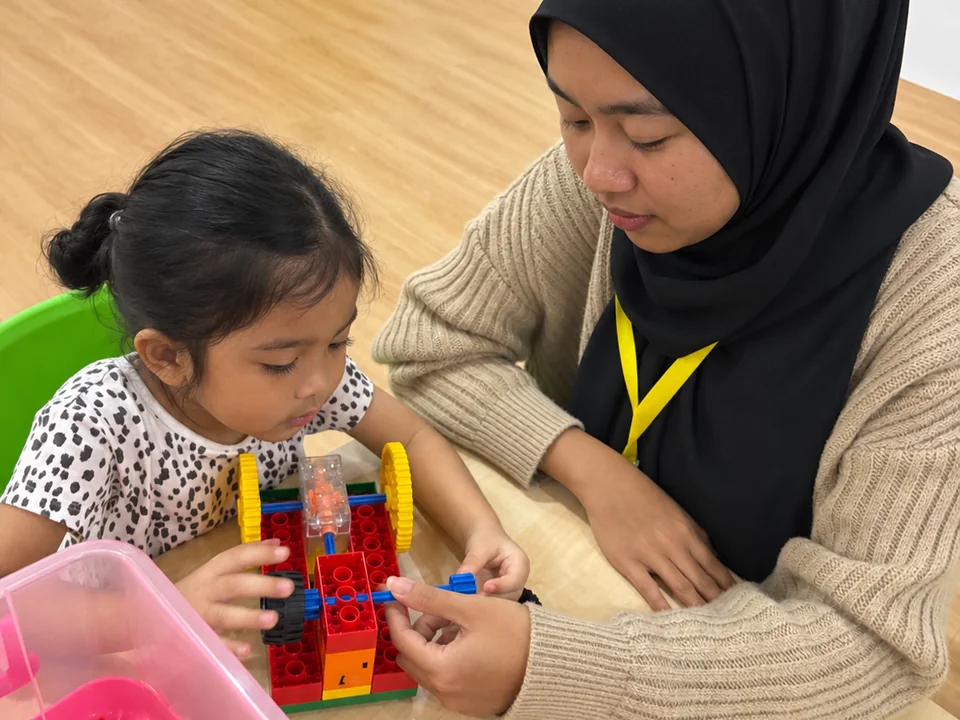
A child and an adult line up a blue axle together on a robot chassis

From a box of parts to a moving robot

Children start with a foundation module and move to more challenging builds over time. The Robotic Interventionist can adjust the support each child receives.

  1. Choose parts

    Identify a wheel or frame and communicate a choice.

  2. Build together

    Line up and connect parts, with a role for each child.

  3. Test and adjust

    Check what happens and try another approach when a part does not fit.

Five developmental focus areas

Here is what each focus can look like during a build. Screening helps identify which skills your child can start practising.

Skills practised through play

Social & Play Skills
Two children have a role in one build. One steadies the frame while the other attaches a wheel. Then they decide who gets the first turn with the controller.
Fine Motor Skills
A child holds the frame with one hand and lines up the wheel with the other. The interventionist can steady the base or start with a larger part if that helps.
Focus & Cognitive Skills
A child looks for a matching axle, checks where it goes and tests whether the wheel turns. A short demonstration or fewer pieces at a time can make the next step clearer.
Independent Learning
After seeing the first step modelled, a child can try choosing and fitting the next piece. The interventionist observes which decisions the child makes independently and where support still helps.
Communication & Language Stimulation
The build gives children a reason to communicate. They can point to a part, use a picture or device, say a word or tell a partner what to try next. The interventionist responds to the way each child already communicates.
What children learn about robots

Children learn what parts do, how to connect them in sequence and how to test whether a build works.

  1. Identify the parts

    Match a wheel to its axle and see how the frame holds them together.

  2. Try a sequence

    Assemble a few parts in order and check what changes when one is moved.

  3. Test and solve problems

    Use the controller, watch how the robot moves and change one thing before testing again.

As children get comfortable with the materials, the same ideas can carry into a build with more steps or a shared project.

How does a session adapt to my child?

Children start with a shared foundation module. The interventionist adjusts the number of parts, the way a step is demonstrated and how much help the child receives.

One child might begin by watching or choosing a part. Another might be ready to fit it independently and tell a partner what to test next. The challenge increases as the child is ready to take on more.

Your child can take part using gestures, pointing, pictures or a communication aid. Tell the interventionist how your child usually makes a choice or asks for help.

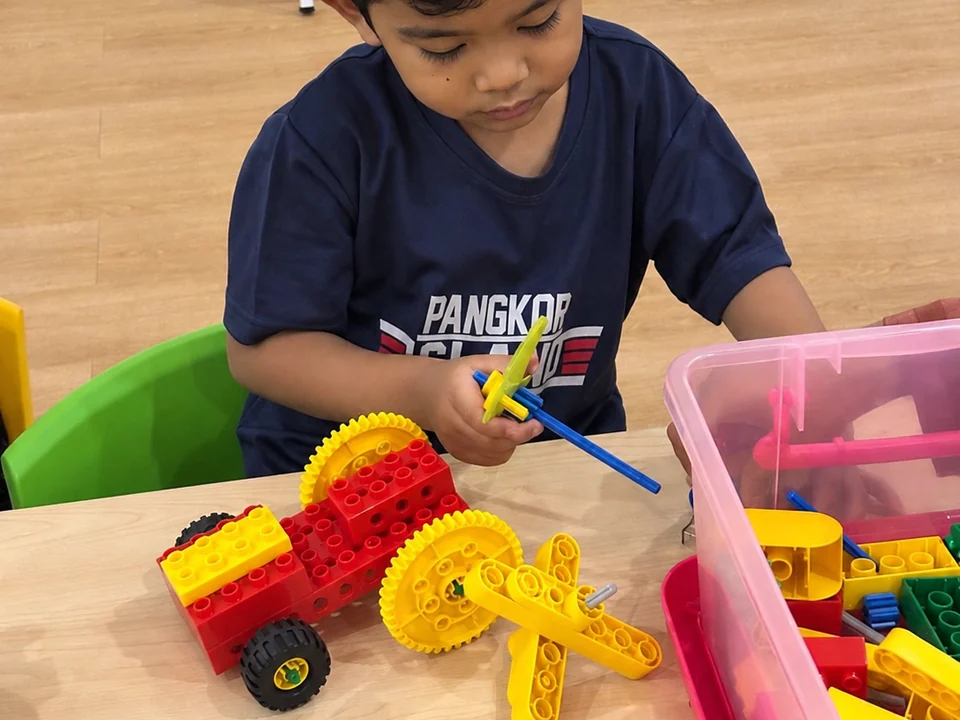
A child examines a blue axle and a yellow component beside a partly built robot

What progress can look like

One child might first wait for an adult to start the build. With practice, that child may begin by finding a familiar piece and trying the next step. Another may feel more comfortable sharing materials or asking a partner for help.

How Roboterapi tracks progress
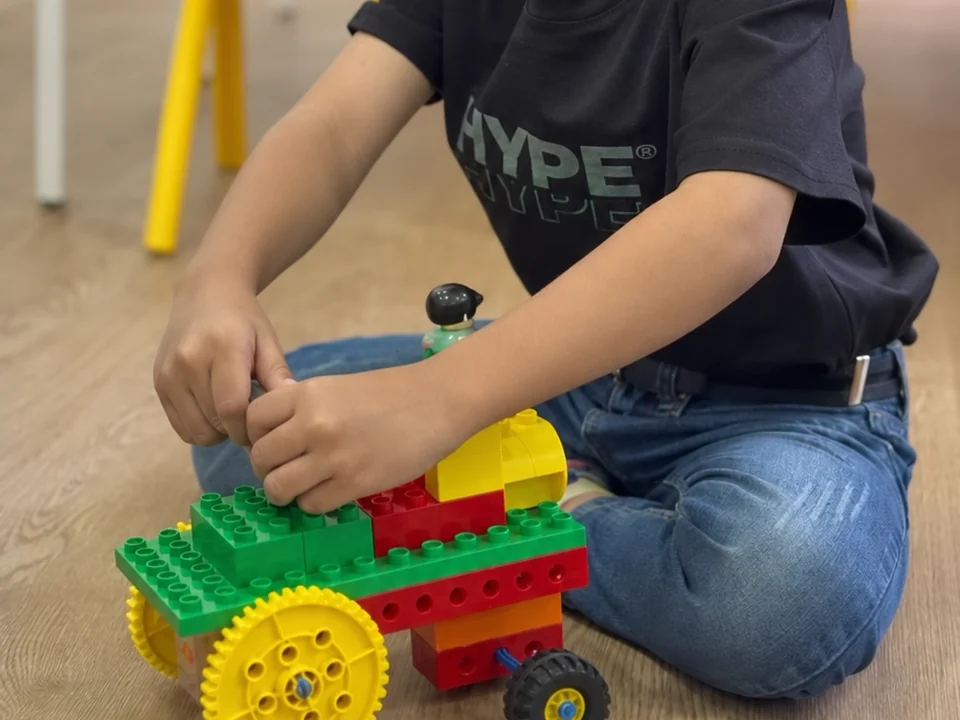
A child steadies a wheeled build while fitting the next component

How progress is reviewed

The Robotic Interventionist proposes an individual plan for review. Your child’s progress is reviewed monthly. Parents receive periodic reports and discuss their child’s progress at parent meetings.

What parents can see in a report

Robotics and STEM. After watching one example, the child fits the next wheel and checks if it turns.

Development. The child points to the piece they need or starts a familiar step with fewer prompts.

Illustrative examples of observations.

Alongside Kizzu EIP

Roboterapi can be taken on its own or alongside EIP. The two programmes can work towards complementary goals, with robotics giving children another setting to practise developmental skills.

Inclusive NextGen robotics

When a child is interested in moving to an inclusive class, readiness and support needs can be discussed based on how the child takes part and progresses in Roboterapi.

Is Roboterapi right for your child?

Start with a guided activity and a conversation about what helps your child participate.

Request a Screening